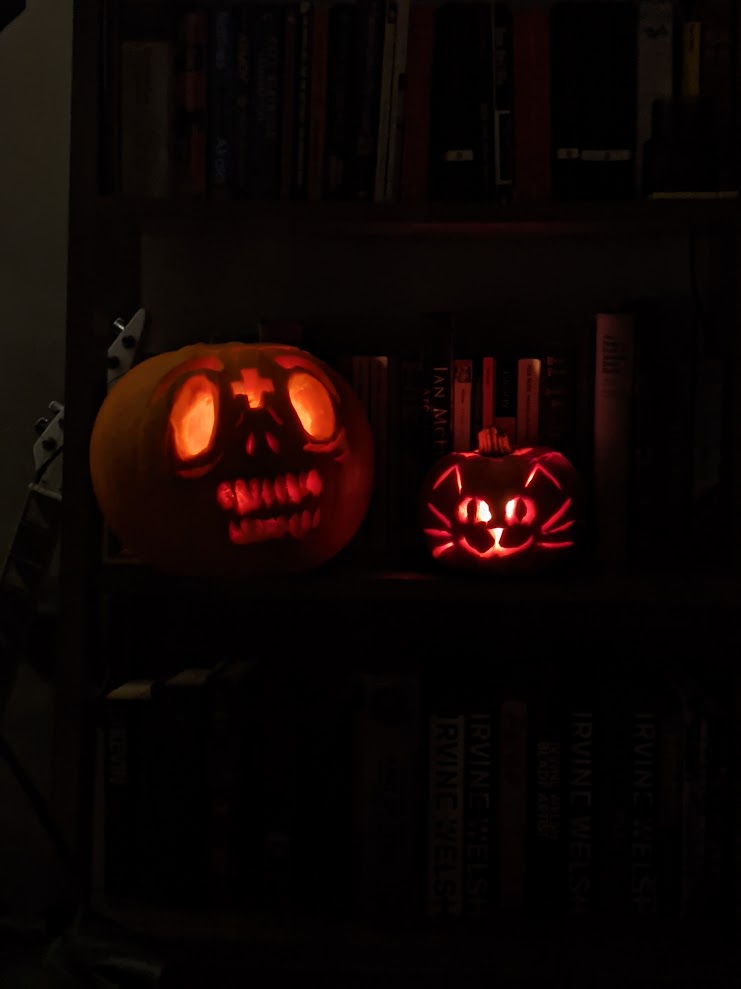
Do you remember the final week of October in school when you were young? I don’t mean as teenagers, when your hormones wreaked havoc on every decision and thought process. I mean when you were a child, who toddled around on legs that still weren’t totally used to your sturdy little torsos.
Do you remember being taken out of lessons to create art works to take home? Covering marbles with different coloured paints and rolling them around a tray on a piece of black paper to create fireworks in the night sky? Painting your hands orange and yellow, and turning your tiny handprints into leaves? Making pumpkin-shaped paper decorations with inky black grins? Did you, too, fizz with excitement when that week rolled around?
I bottled that excitement somewhere, and a little of it gushes out in the lead up to Halloween every year. The period that spans the last week of October into the first week of November is, without doubt, my favourite time of year.



Halloween’s history is entwined with that of the ancient Celts. The festival of Samhain (sah-win) emerged from the Boyne Valley in Ireland, between the Tara and Tlachtga (clock-ga) Mounds. At the end of their year, Celtic tribespeople would meet to celebrate and prepare for the descent into darker months ahead through the sharing of light. The tribes of West Ireland would light a bonfire upon the Tlachtga mound and serve large feasts from the last of the harvest, with the aim of uniting and feeding the communities there – both living and dead.
Whether it was Samhain in Ireland, Nos Calan Gaeaf in Wales, or Nos Kalan Gwav in Cornwall, the Celtic people raged against the dying of the light and embraced the liminality that came with darkening skies. On this last night of their year, the veil between their world and the spirit world was believed to be at its thinnest, and their dead friends, family members and enemies were thought to linger at physical boundaries. It was their job to celebrate, remember, and appease them to ensure good luck for the year ahead.
For Celtic tribes across Western Europe, there were always festivals that celebrated harvest, transition into rest, and the celebration of death. Honouring nature’s all-encompassing role in our lives, and our human connection to the cycles and the seasons allowed for a celebration of aging and wisdom; a gratitude for our dead loved ones and the roles they played in shaping us; and the ability to hope and wonder about the future. These festivals even survived Christianity’s global steam-rolling, as it was acknowledged that to suppress such important events would cause uprising and rebellion throughout ancient Britain. Instead, they were absorbed into the Christian calendar, renamed All Hallow’s Eve and All Saint’s Day, and left to travel across oceans via the traditions of immigrants into America in the 19th Century. Turnip carving in Cornwall became pumpkin carving. The Welsh and Irish traditions of leaving food sacrifices for spirits in the hope of good luck for the year gave way to trick or treating. Our celebration of life cycles and our connection to the natural world were replaced with commercialisation.
So many of my Halloween traditions have been inculcated into me through years of absorbing American media. It started with me begging to go trick or treating when I was 8 or 9 – a resounding ‘no’ on the basis that we would scare all the old people in our village to death – and culminated with planning costumes for parties that married the spooky and unhinged with the sort of sexy when I was in university. This excitement has filtered into my adulthood too, although these days I’m more likely to be found marathoning The Conjuring films with a cushion on my lap (just in case).
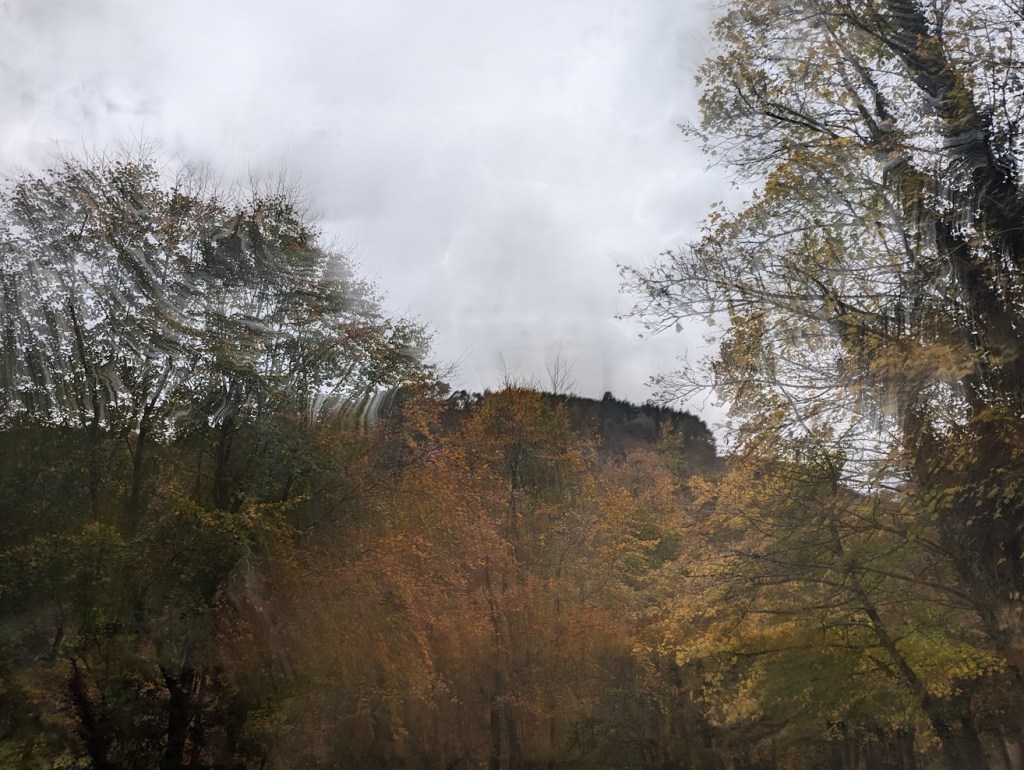
My love of Halloween feels deeper than the standard human obsession with feeling scared. There’s something almost hereditary about my draw to this season. I love the way that wind swirls on a calm day in autumn, making the air feel full and alive; I love when the light from the late rising and early setting sun throws long, fiery oblongs on my walls. I love my memories of tinned food and root vegetables piled in heaping pyramids during the harvest festival in primary school, or bobbing for apples and devouring the wet, shining fruit afterwards. This transitional time is when I feel most ‘me’, so learning how singularly important it was to my Celtic ancestors makes me feel a little more whole. This year, I have thought more than ever before about their ancient traditions; how they survived the Christianisation of the Western world; how they formed the foundations of Halloween and seasonal change for centuries. For the first time, though, I feel like we are becoming removed from them.


In 2025, spends associated with Halloween are predicted to reach £800 million in the UK alone. In the US this goes up to about $12 billion. It’s gone further than just sweets and costumes, expanding into full blown seasonal décor changes, with some even going as far as painting and decorating their front doors to make them more Instagrammable for the season. My own feed was pushing influencer-fronted content from Lidl brand partners about their new pumpkin shaped cast iron from the very beginning of October; I saw the first cutesy ghost candles on the shelves in local supermarkets in early September. And though I have always enjoyed Halloween, at what point did we lose the point of it all? At least when we throw Halloween parties we are still sharing in the roots of Samhain and Nos Calan Gaeaf: we share food, music, and experience with our communities; we talk about death and rituals; we carve pumpkins and light candles that slice through the descending darkness. How does buying a ‘grazing board’ in the shape of different squashes and gourds, or a ghost shaped key dish really evoke the spirit of transition? Just like everything else in the world, our obsession with having the newest thing is killing traditions that have survived for thousands of years before us.
This year, why don’t you fight back a bit?
There are so many ways you can bring Celtic traditions into your celebrations this year. Some we’ve done in the last ten years include:
- Bringing back bobbing for apples! Or you could try the ancient Cornish variation and dangle them from the ceiling instead.
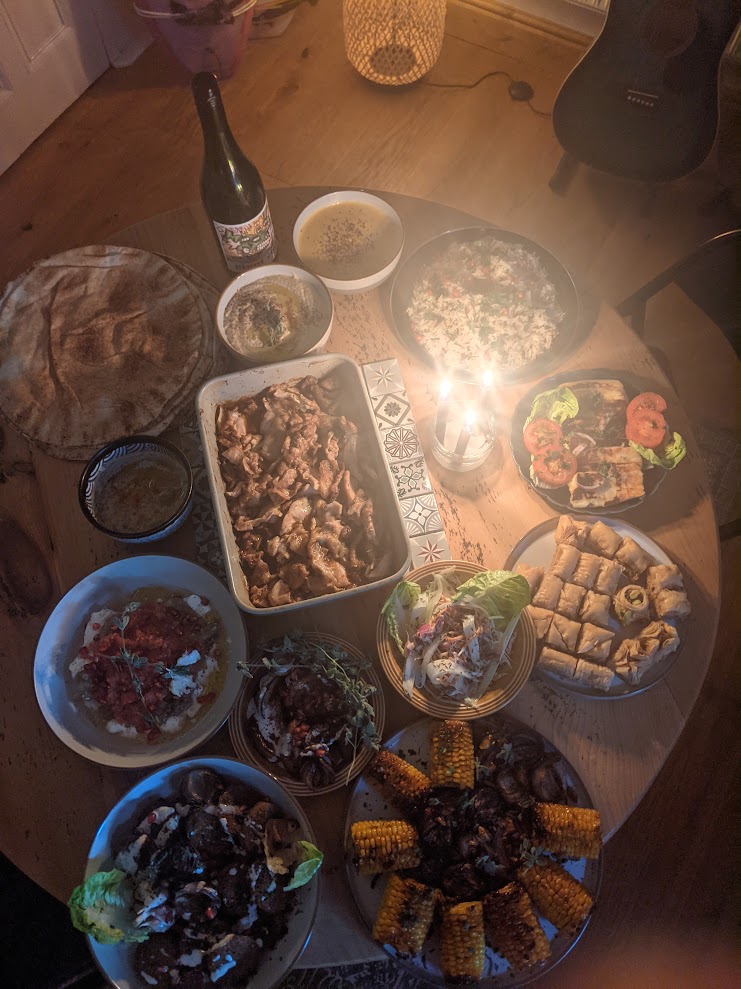
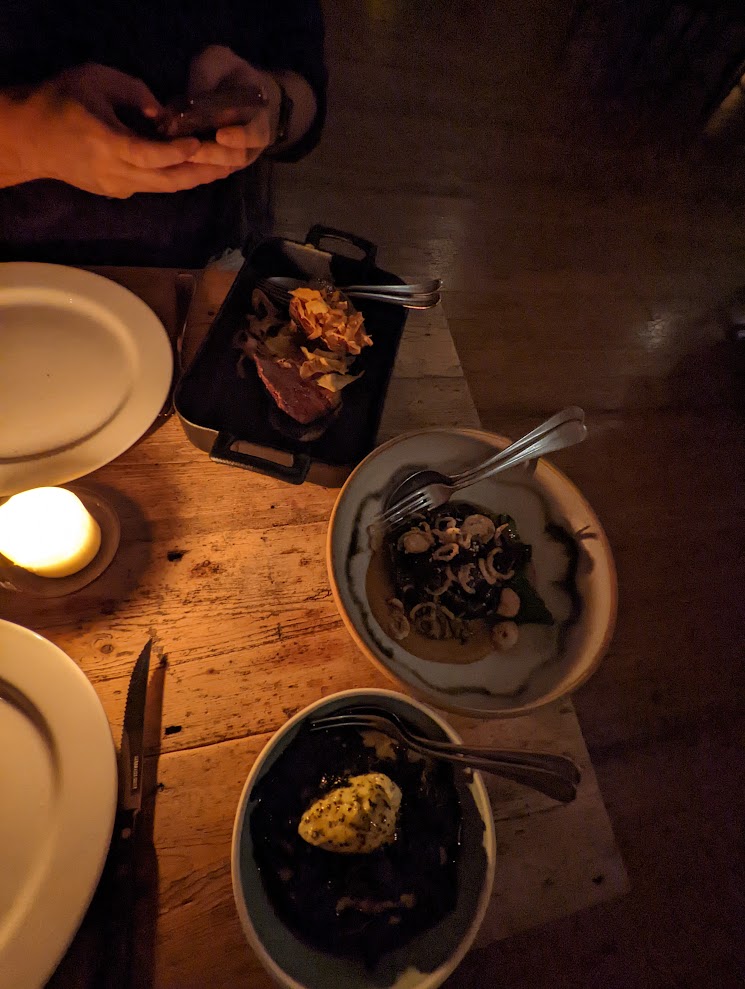
- Make a candlelit dinner to share with your loved ones. Lean into seasonal produce, and take a course each. Celebrate your community and the people who shape you.
- Marathon horror films! Talk about death! Death is a normal part of our lives, as tragic and uncomfortable as it can be sometimes.
- Talk about the memories you have of loved ones you’ve lost. Visit their special spot, keep their memory alive.
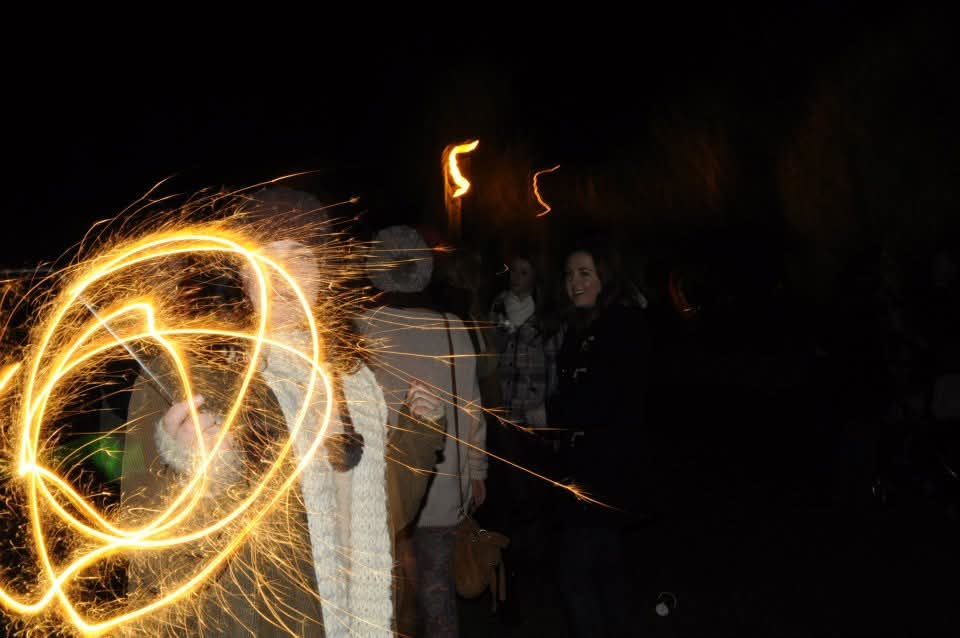
- Light a bonfire in a safe place where you can’t cause any wildfires or damage. Tell stories, share in the light, and accept the move into darkness.
Tell me if you try any of them! And keep your connection to natural cycles alive.
 Roots and Mooring Lines
Tell me what you think!