• Home may be where the heart is, but without books your heart will be hollow

    “The best moments in reading are when you come across something – a thought, a feeling, a way of looking at things – that you’d thought special, particular to you. And here it is, set down by someone else, a person you’ve never met, maybe even someone long dead. And it’s as if a hand has come out, and taken yours.” – Alan Bennett, History Boys.

    If you’ve ever set foot in an English department, there is a chance you’ve come across these words. Some of you may have even studied them. I’ve seen them plastered on the walls of a communal space in one school, and heard them poured from the mouths of enthusiastic teachers and lecturers in classrooms and seminars alike. It is a line that captures so perfectly the power of reading and words, and the role they play in forming our own consciousness and sense of self.

    There have been claims that reading can alter your humanity and processing since Plato. Through the 1990s and 2010s, people have argued that by empathising with characters we learn to empathise with humans, or that reading literature actually makes you a better citizen. Its impact has been philosophised and psychologised for hundreds of years. So far, research into these claims has come back entirely inconclusive, but the idea that books play a role in developing empathy – the soft skill I think is most important – is one of my great joys in life. You mean one of the ways I might make any of my own hypothetical children kinder would be to read with them? Hell yes, I’m in.

    I firmly believe that books help make better people. I also firmly believe they help make better homes. 

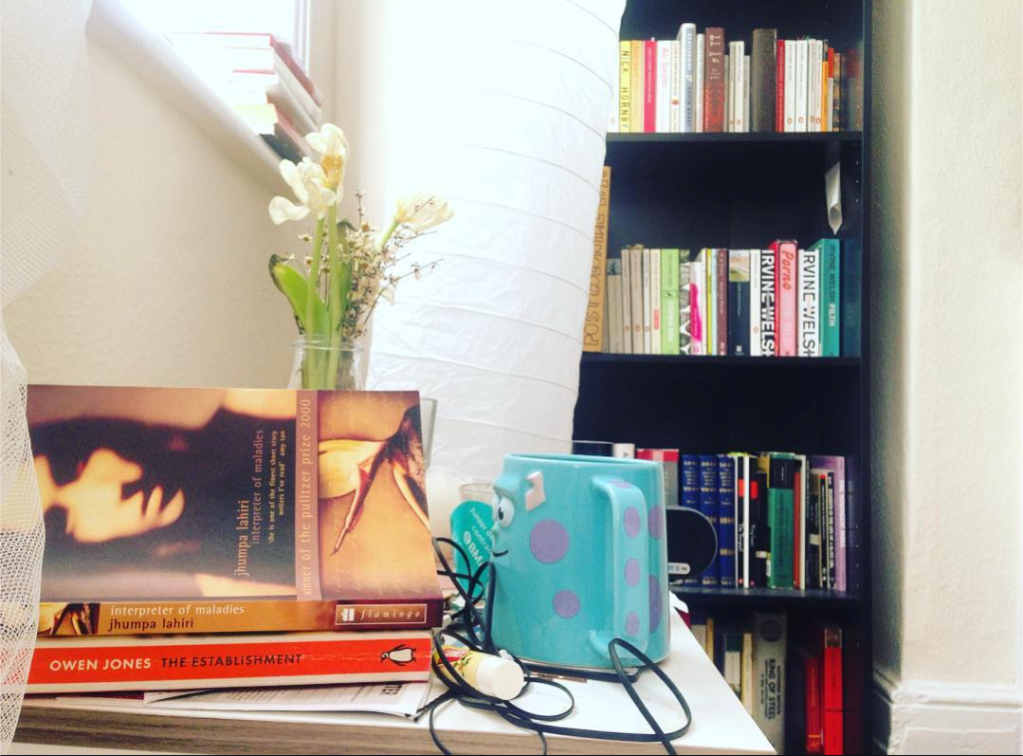
    No matter where I’ve lived, my books have been the first means of decorating my space. I spent hours deciding how to order them in university – alphabetically by surname? By colour? In the style of Rob from the 2000 adaptation of High Fidelity, autobiographically? (‘If I want to listen to Landslide by Fleetwood Mac? I have to remember that I bought it for someone in the Fall of 1983 pile, but didn’t give it to them for personal reasons.’) They work on two levels: they give visitors a snapshot into you and your personality, and they add colour into whatever space you are living in. Usually, they are the first thing I look for when I walk into a home, as they give us a foundation for conversation, allowing us to open up big philosophical questions about the world, our relationships, and what it’s all about. 

    But what happens when their purpose is reduced to little more than decoration? What happens when they become an accessory, and no longer a way of exploring the world from the comfort of your sofa? Are books going the way of fresh food – no longer acting as a symbol of knowledge and inquisitiveness, but more of power and status?

    This was something that I first noticed in 2022, when I used to spend every other day watching Architectural Digest’s tours of celebrity homes on youtube. Every house they walk through is artfully staged, and nearly all of them have dominating, wall-to-ceiling bookshelves in jaw-dropping offices. It was Ashley Tisdale who first owned up to the fact that her personal library was not truly reflective of her and her family’s interests, saying ‘These bookshelves, I have to be honest, actually did not have books in them a couple of days ago. I had my husband go to a bookstore and was like “You need to get, like, 400 books!” And my husband was like, “We should be collecting books over time, and like, putting those in the shelves.” But I’m like, not when AD comes!’ Yes, it was funny. Yes, it was refreshingly honest. But there was something about it that jarred in me – as if the purpose of having books wasn’t to encourage curiosity and lose yourself in a thought, but to make your house look interesting. 

    Then came BookTok, Bookstagram, and other online spaces in which it wasn’t always about celebrating the joy of reading something you like, but being seen reading the book of the moment. From Colleen Hoover and Sarah J. Maas to Sally Rooney and anything published by Fitzcarraldo Editions and their striking blue book covers, choosing a book seemed to be driven by wanting to belong to a group, reflect a trend, and be seen putting the right thing on your shelves. 

    Capitalism and consumerism got their nasty talons into literature, and ‘performative reading’ was named. 

    This is something that anyone who reads has been guilty of, by the way, and has probably existed since learning to read became widespread. I remember reading The Catcher in the Rye and The Great Gatsby when I was 16 or 17, not necessarily because I wanted to, but because it’s what all the other cool, indie people in my year who I was friends with and so admired were reading. My obsession with the Brontë sisters only became cool a decade later with the rise of dark academia. And though I read to keep up with my social group, I fell in love with these books and they opened my world up and started my life-long obsession with calling out how destructive capitalism is to our sense of happiness. Although I was reading to keep up with the trends and fashions amongst my peer group, I was shaped by these experiences, and inevitably the next generation of hipsters and indie kids are going through this too – they just don’t have the privilege of doing this without a camera being pointed at them. Reading is reading, and I love to see it!

    But performative reading is growing at a time when less young people than ever read for joy, and 18% of adults are functionally illiterate. Reading is amazing and should be celebrated, but when reading is becoming a trend amidst a backdrop of falling literacy rates, it highlights how far we have adopted reading as an aesthetic, instead of a valuable, empathising practice. As beautiful as a well crafted bookshelf can be, if it is filled with books you’ve bought but never opened, or books you’ve swapped for doomscrolling because you weren’t hooked within the first few pages, then what’s the point? You may as well have just visited Ikea and asked for a few boxes of the fake books they use to line the walls of their model rooms and called it a day. Who cares if they’re in Swedish, or are just pages and pages of Lorem Ipsum dummy text? If it’s just for appearances, you’ll achieve the same thing. 

    All of my biggest fears and issues with performative reading and books as a trend came home to roost earlier this year, when talking to my dad about his home renovations. He told me that he has been reading more, and enjoying it – which is huge, as his attention span is whacked. I don’t remember him being able to sit through reading a chapter of a book with me as a child, instead opting to make up stories about anthropomorphic appliances that kept our house running whilst we slept. He had a vision for a room in the back of his house, which he wanted to fill with books, CDs, and vinyl; a space where you could entertain yourself slowly and without the need of the internet. He followed this up by saying he was just going to get a ‘job lot from eBay’ when it came to filling his shelves. 

    It was at this point that the knock on effect of the likes of Architectural Digest fully smacked me around the head. My dad could see the role that books played in a house, in creating warmth and personality, but valued their role as decoration over their role as celebrating curiosity. 

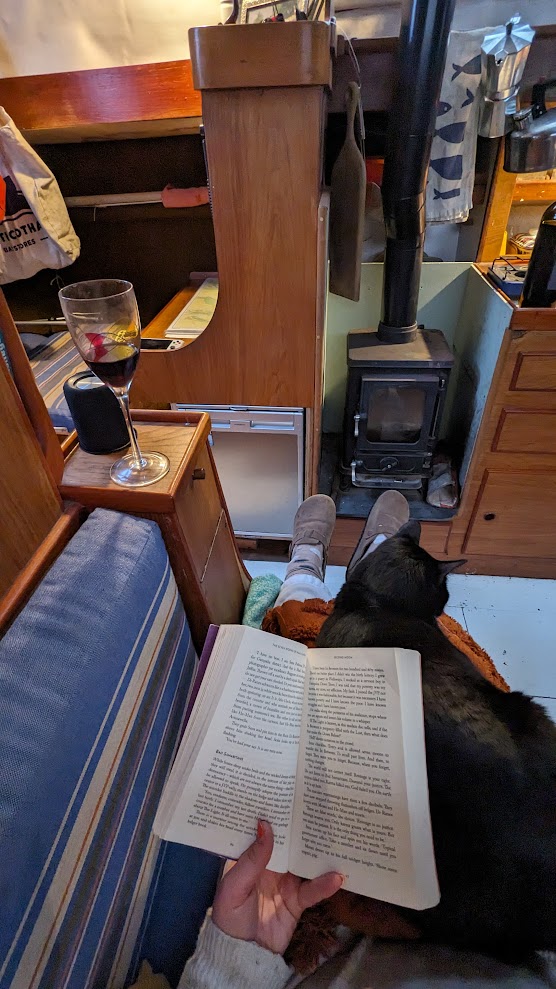
    My dad is not a celebrity whose home is going to be on display for millions to nit-pick at. He is a normal man in his fifties, who is excited about a project. But he has adopted a style-over-substance attitude to books from absorbing design magazines and watching house tours on Youtube like I used to. I spoke at him, at length, about the power of books and curating a collection over time; of rummaging through charity shops and swap shops; of lending and sharing books with your community; of crafting a library that might not always look good, but will definitely make you feel whole and full. And the first step I am going to take to help him get there is to send him a parcel of books from my own shelves that I adored, and I think he will too (I will not be posting this, if you’re reading Dad. It will be in the boot of my car next time I come home to visit, promise). There isn’t a better present to give someone than a book you loved off of your shelf – the more dog-ears and notes in the margin the better! In fact, I’m determined to make 2026 the year I pass on more books than ever, if only to make room in our tiny flat and tinier boat for more. 

    If you are someone, like my own Dad, who wants to start a journey with books, or someone who has a shiny new bookshelf that you want to fill, firstly I envy you. You’re at the start of an adventure that will change you forever. Secondly, please take your time. Every book you add to that shelf – whether it’s a five-star winner, or a DNF (did not finish) – is your chance to discover another part of your personality, and make your heart feel a little fuller. If you’ve got a book that you think belongs on any shelf, comment it below, and help us all shape our 2026 reading lists, and add more life to our living room shelves. 

    Read slowly, read often, and read to find yourself and others. That’s what a really good book will do for you. 

  • Humans vs. Water: the battle of the bilge pump

    Jason’s unblinking eyes were fixed to his phone screen. His chewed thumb swept up the device twice, three times, before locking it, pocketing it, and casting his gaze down to navigate the tree roots that sliced through the concrete of the coast path. Our Boxing Day walks traditionally took us to far West Cornwall, where we’d scramble over carns, tors, cliffs, and rock formations that look like they’ve been placed deliberately, balanced by the hand of a deity. This year, we travelled only five minutes down the coast to the beaches in Falmouth. Jason had convinced himself that our boat – the one we’d moved onto that very morning – was going to sink. And it was the bilge that we had to blame for his silent terror. 

    The bilge is the lowest internal point of a boat, where water inevitably collects. People will tell you they have a dry bilge, and they are almost definitely lying. Whether it’s condensation, heavy rain, or a clumsy visitor spilling a drink, liquid has a way of finding its way into nooks and crannies and eventually down to the lowest point. A little is normal, but too much will weigh down your boat and see it on the wrong side of the waterline, so a pump is essential to keep everyone safe. As sea dwellers, we expect a lightly damp bilge and as long as it’s not sea water we’re pretty calm; that Boxing Day, Jason was certain the water had a tang to it. He had swilled a mouthful of it around, using his taste buds to assess if it had notes of salt before spitting and rinsing, as if conducting the world’s most unpleasant, risky wine tasting. 

    Was there a leak? A hole or crack we hadn’t noticed? That we had caused? Were we going to return to our new home sitting a few centimetres lower in the water? Was the bilge pump, that we’d set to run before leaving, doing its job? His eyes darted left to right, as if reading the questions that I knew were filling his amygdala to capacity. 

    Obviously, it was all fine. The water level had more than halved while we walked, and the salty tang was imagined. 

    Problems with bilges are a common experience. Pumps to drain them can get overloaded, can fail, can trip the electrics, or not come on when they’re needed. If there is a problem with fuel tanks or engines, well all that lovely diesel, petrol, or even oil could end up in the bilge too, creating an opaque slurry that requires hand pumping and collecting for disposal. There’s no way of doing that without getting so close to the concoction that the heady aroma of stagnant water and chemicals will leave you dizzy and nauseous. But it doesn’t matter how gross it gets – without a functioning bilge, you’re not going to last sat in a harbour or pontoon, let alone actually travelling on our waterways. 

    For the last year and a half, we have used a DIY electric pump, operated by a switch labelled ‘shower.’ It has meant lifting a little hatch in our sole boards and sticking your nose into the hull of our boat to inspect the water level, then (in my experience as a shorter-than-average girly) dangling into one of our lockers until my fingertips brush the hose pipe the pump is connected to. The end of the pipe gets stuck overboard, and it’s at this point you press ‘shower.’ We have also supplemented this by absorbing any water we can’t quite pump out with nappies (yes, the kinds worn by babies – they’re absorbent and easy to access), which we line the floor of the bilge with through wet seasons. This process is fine, but it’s laborious, and requires us to be on the boat all the time, especially in bad weather, which is when we are most likely to be hunkering down somewhere with foundations and that can’t heel in the wind. We needed to make a change. 

    We swapped out the manual operation for an automatic pump with a float sensor, meaning we no longer have to take up bits of our floor and stick our heads into the hull to see what the water level is like; once she hits a certain level, the water will be spewed out whether we are there or not. It’s more efficient, safer, and so much more straightforward. 

    Between installing an automatic system and the work done to reduce deck leaks and condensation build up, our bilge is like new: we can see the GRP base of it more days than not. But that doesn’t mean we’ll turn our back on the nappy hack, or that Jason will stop texting me ‘Check the bilge xxxx’ on days I get home earlier than him. The bilge consumes our thoughts and we check and care for it constantly, but that will never change, because a bilge is for life, not just for Christmas.

  • How to stop mould eating your lungs on board

    At lunchtime on 6th June, a ‘moderate thunderstorm warning’ flashed up on my lockscreen, courtesy of the MetOffice. These warnings started appearing some time in 2024. I remember finding the first one exciting, but after the fifth ‘amber alert for rainfall’ and the third accompanying ‘strong wind warning’, they became a bit pedestrian. 

    Cornwall is almost always a bit damp; that’s what makes her landscape so exciting. Palm trees and echiums thrive thanks to the rain, the subtropical climate, and the high humidity levels. But so does the mould that weaves its way across any manmade structure that you can think of: houses, flats, pubs, and of course, boats. 

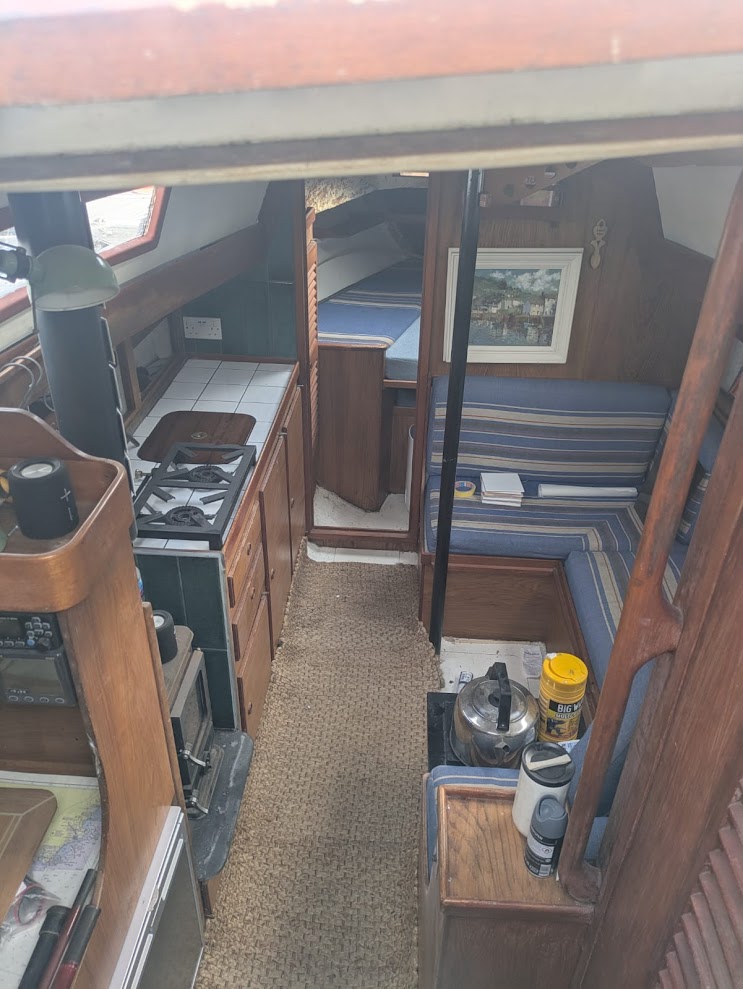
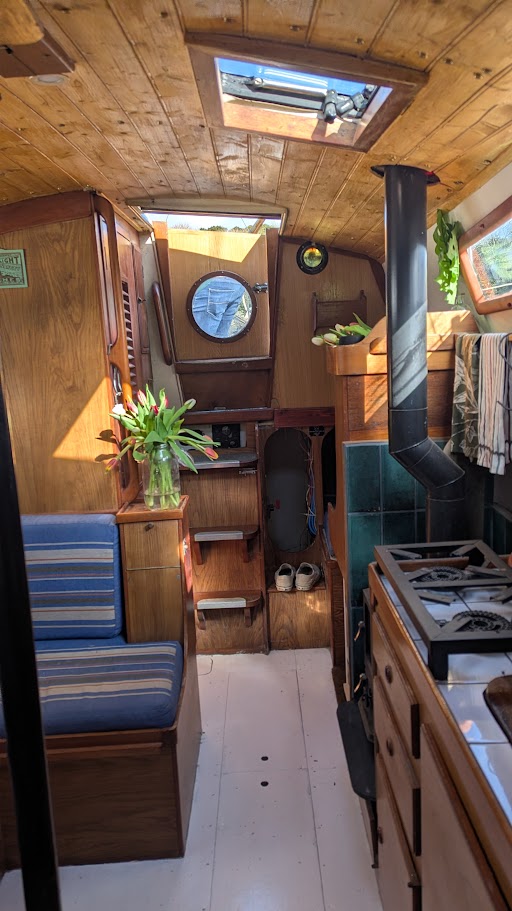
    The first morning we awoke on Lowenna, the air was thick. I took a deep breath and almost choked on tiny particles of moisture that hung in the air and clung to every exposed surface. Our little log-burner and a dehumidifier helped, but you couldn’t ignore the black blossoms that flourished on our uninsulated vinyl ceilings. 

    You couldn’t see the more sinister blooms that festered behind the fuzzy, carpeted walls of the V-berth, where we slept. 

    It took stripping out the 47-year-old coverings, getting back to the raw GRP (glass reinforced polyester) and Jason cleaning spikes of mould that stood like stalagmites out of our pilot berth for us to realise how much dampness was affecting Lowenna. 

    We spent days researching different ways to lock warmth in and water out. We dried out the walls and, for the first time since 1978, insulated the entire cabin. We slathered our coach roof in insulation foam and Jason mixed flowcoat for our ceilings. This gel-based mixture acts like a barrier, stopping rain from sneaking in through the surprisingly porous fibreglass walls. It’s also a material that requires a gas mask to use, and that is liable to explode if it’s not measured accurately – Jason quite seriously told me that if I heard the paint tray fizzing to just throw the whole thing into the sea. 

    We needed to think carefully about what we would use to cover the flowcoat and how it would affect our living space. We considered cork – which absorbs moisture and allows for easy decoration – but couldn’t find panels that would bend around Lowenna’s curves and contours. We explored tongue and groove wood panelling, which Jason’s Dad had fitted beautifully to our coach roof, but it didn’t have the necessary flexibility for the walls. It needed to look clean and bright, and not be a breeding ground for fungus. Enter leatherette. Malleable, easy to cut to shape, wipe clean, and lined for warmth. 

    If you, too, want to have a crack at reupholstering a small space – boat, van, caravan – these are the steps that we took to make our space feel fresher and safer. 

    1. Measure and cut out your material:
      • You’ll need to know the rough surface area, which we got ourselves in a right muddle trying to work out. If you are replacing old material, like we were, hold onto the original as a template and draw around it so that you don’t have to do as much calculating and figuring.
      • Using a craft knife or Stanley knife, cut out your shape, giving yourself some excess – we did a few centimetres either side. This can be trimmed away once the material is attached. 
    2. Clean down the walls as much as possible:
      • Dirt and old gunk can make it more difficult to affix new material because of the uneven surface, and if you’re using a softer material like leather or leatherette, it could exaggerate those lumps and bumps. 
      • Give your walls a good scrub down and get as much excess dirt off as you can before you start working again. 
    3. If you’re on a boat, flowcoat your walls:
      • Flowcoat requires mixing of chemicals that are both corrosive and explosive, so make sure they are mixed by someone who knows what they are doing. 
      • Once mixed, it will be a thick mixture and will absolutely leave streaks if you are using a brush. Make sure that every surface is covered, leaving no exposed walls. It begins to ‘go off’ quickly and will become tacky – repainting over this will just make it peel off, so one thick coat is fine.
      • The space needs to get to at least 17 degrees Celsius for it to cure. Give it a day or two at least. If you are worried about the temperature or dampness, you can always leave a dehumidifier running to help it along. Once the walls are more-or-less dry to the touch, you’re good to go.
    4. Line up the material and pin down to check:
      • We used the material we had taken from the wall as a template, and we still needed to do some checking and aligning. Do not rush in and assume it will be perfect. Use something to attach your material to the wall temporarily and make sure that everything lines up. 
      • Windows are helpful as a marker for aligning, and wall staples are great for attaching temporarily – the staples are remarkably easy to remove. 
    5. Push the material flat to the wall for a final check:
      • You don’t want to end up with walls that look like a pair of leggings that have lost their elastic. 
    6. Start affixing your material:
      • Using a quick dry spray trim adhesive, spray directly onto the wall – not the material – in small sections. 
      • Press down with your hands for warmth and smooth carefully to ensure your material is tight. 
      • Using something large and flat, smooth the material against the wall again to remove any air pockets. I used a book for large flat spaces, and an old power bank for a phone we had knocking around for more awkward ones. 
      • Go slowly, spraying and smoothing to ensure there are no bubbles or gaps. 
      • Make sure you’ve got something quick-dry but not instant so, if needed, you can peel back and reapply to make sure it looks fresh. 
      • If you have awkward walls, eg. The V-berth, which is curved and narrows at the far end, start at the narrow end and give yourself plenty of excess material.  

    I haven’t woken up choking on damp air since reupholstering. There are no longer sinister marks flourishing at my eye line as I lie in bed, and there is a freshness and modernity to Lowenna that I didn’t think you could bring into a boat from the late ‘70s. Life is all about balance, and you know what your space needs more than anyone else. If you give reupholstering a go, let me know how your home feels after.

  • The legs of Samhain, the arms of Allantide, and the face of Nos Calan Gaeaf: Halloween is like Frankenstein’s Monster

    Do you remember the final week of October in school when you were young? I don’t mean as teenagers, when your hormones wreaked havoc on every decision and thought process. I mean when you were a child, who toddled around on legs that still weren’t totally used to your sturdy little torsos.

    Do you remember being taken out of lessons to create art works to take home? Covering marbles with different coloured paints and rolling them around a tray on a piece of black paper to create fireworks in the night sky? Painting your hands orange and yellow, and turning your tiny handprints into leaves? Making pumpkin-shaped paper decorations with inky black grins? Did you, too, fizz with excitement when that week rolled around? 

    I bottled that excitement somewhere, and a little of it gushes out in the lead up to Halloween every year. The period that spans the last week of October into the first week of November is, without doubt, my favourite time of year. 

    Halloween’s history is entwined with that of the ancient Celts. The festival of Samhain (sah-win) emerged from the Boyne Valley in Ireland, between the Tara and Tlachtga (clock-ga) Mounds. At the end of their year, Celtic tribespeople would meet to celebrate and prepare for the descent into darker months ahead through the sharing of light. The tribes of West Ireland would light a bonfire upon the Tlachtga mound and serve large feasts from the last of the harvest, with the aim of uniting and feeding the communities there – both living and dead

    Whether it was Samhain in Ireland, Nos Calan Gaeaf in Wales, or Nos Kalan Gwav in Cornwall, the Celtic people raged against the dying of the light and embraced the liminality that came with darkening skies. On this last night of their year, the veil between their world and the spirit world was believed to be at its thinnest, and their dead friends, family members and enemies were thought to linger at physical boundaries. It was their job to celebrate, remember, and appease them to ensure good luck for the year ahead.  

    For Celtic tribes across Western Europe, there were always festivals that celebrated harvest, transition into rest, and the celebration of death. Honouring nature’s all-encompassing role in our lives, and our human connection to the cycles and the seasons allowed for a celebration of aging and wisdom; a gratitude for our dead loved ones and the roles they played in shaping us; and the ability to hope and wonder about the future. These festivals even survived Christianity’s global steam-rolling, as it was acknowledged that to suppress such important events would cause uprising and rebellion throughout ancient Britain. Instead, they were absorbed into the Christian calendar, renamed All Hallow’s Eve and All Saint’s Day, and left to travel across oceans via the traditions of immigrants into America in the 19th Century. Turnip carving in Cornwall became pumpkin carving. The Welsh and Irish traditions of leaving food sacrifices for spirits in the hope of good luck for the year gave way to trick or treating. Our celebration of life cycles and our connection to the natural world were replaced with commercialisation.

    So many of my Halloween traditions have been inculcated into me through years of absorbing American media. It started with me begging to go trick or treating when I was 8 or 9 – a resounding ‘no’ on the basis that we would scare all the old people in our village to death – and culminated with planning costumes for parties that married the spooky and unhinged with the sort of sexy when I was in university. This excitement has filtered into my adulthood too, although these days I’m more likely to be found marathoning The Conjuring films with a cushion on my lap (just in case). 

    My love of Halloween feels deeper than the standard human obsession with feeling scared. There’s something almost hereditary about my draw to this season. I love the way that wind swirls on a calm day in autumn, making the air feel full and alive; I love when the light from the late rising and early setting sun throws long, fiery oblongs on my walls. I love my memories of tinned food and root vegetables piled in heaping pyramids during the harvest festival in primary school, or bobbing for apples and devouring the wet, shining fruit afterwards. This transitional time is when I feel most ‘me’, so learning how singularly important it was to my Celtic ancestors makes me feel a little more whole. This year, I have thought more than ever before about their ancient traditions; how they survived the Christianisation of the Western world; how they formed the foundations of Halloween and seasonal change for centuries. For the first time, though, I feel like we are becoming removed from them. 

    In 2025, spends associated with Halloween are predicted to reach £800 million in the UK alone. In the US this goes up to about $12 billion. It’s gone further than just sweets and costumes, expanding into full blown seasonal décor changes, with some even going as far as painting and decorating their front doors to make them more Instagrammable for the season. My own feed was pushing influencer-fronted content from Lidl brand partners about their new pumpkin shaped cast iron from the very beginning of October; I saw the first cutesy ghost candles on the shelves in local supermarkets in early September. And though I have always enjoyed Halloween, at what point did we lose the point of it all? At least when we throw Halloween parties we are still sharing in the roots of Samhain and Nos Calan Gaeaf: we share food, music, and experience with our communities; we talk about death and rituals; we carve pumpkins and light candles that slice through the descending darkness. How does buying a ‘grazing board’ in the shape of different squashes and gourds, or a ghost shaped key dish really evoke the spirit of transition? Just like everything else in the world, our obsession with having the newest thing is killing traditions that have survived for thousands of years before us. 

    This year, why don’t you fight back a bit? 

    There are so many ways you can bring Celtic traditions into your celebrations this year. Some we’ve done in the last ten years include: 

    • Bringing back bobbing for apples! Or you could try the ancient Cornish variation and dangle them from the ceiling instead. 
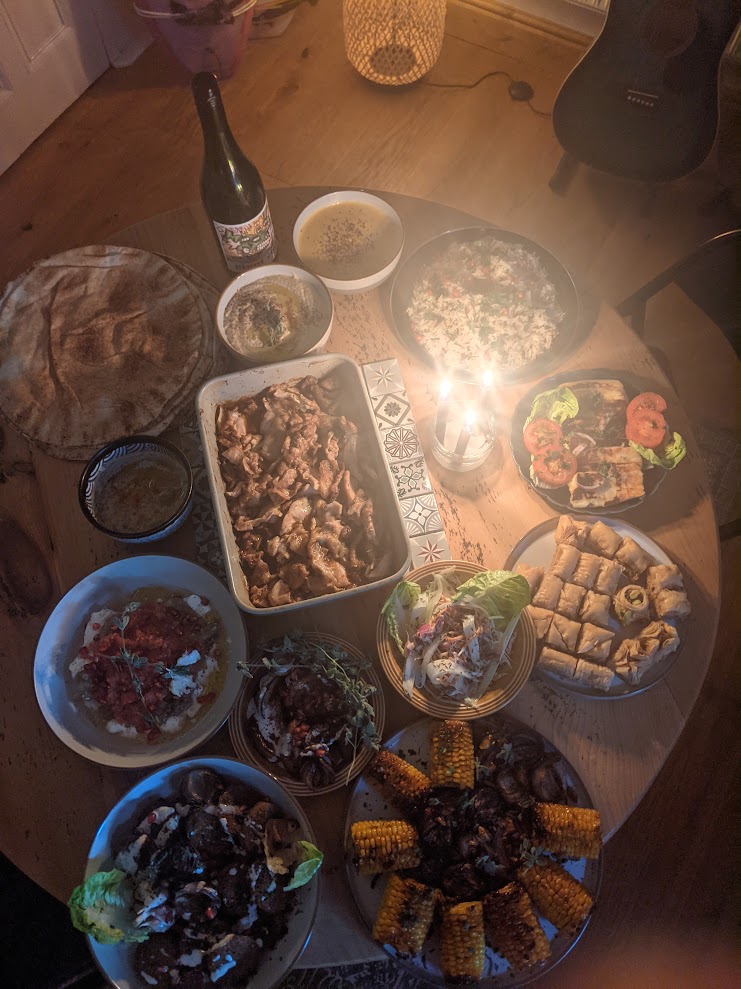
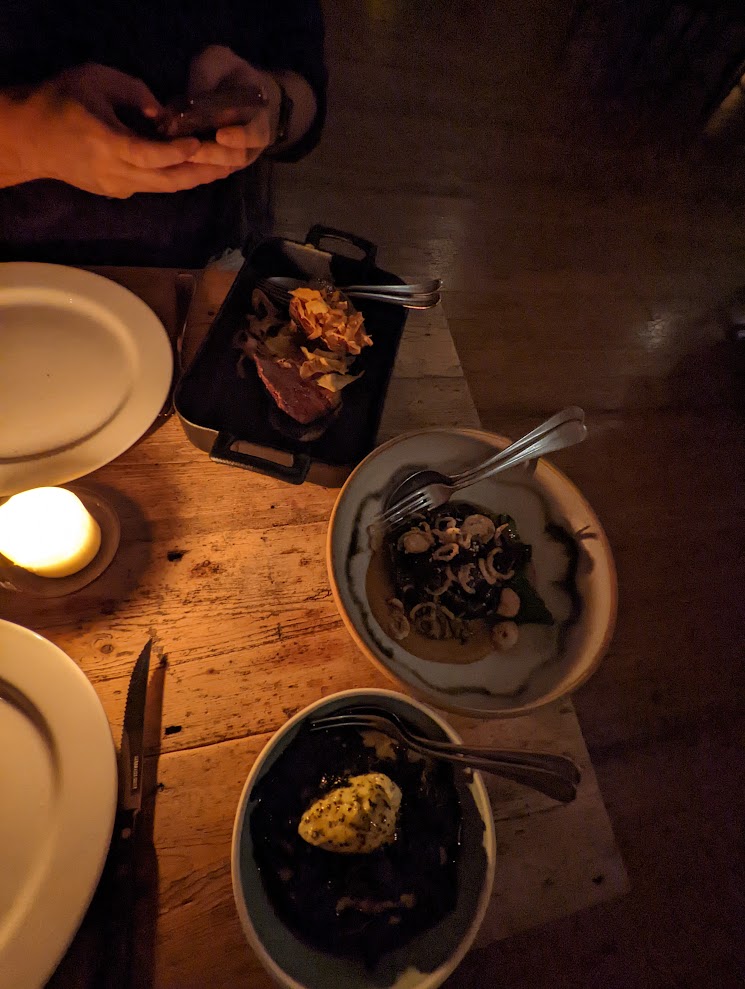
    • Make a candlelit dinner to share with your loved ones. Lean into seasonal produce, and take a course each. Celebrate your community and the people who shape you.
    • Marathon horror films! Talk about death! Death is a normal part of our lives, as tragic and uncomfortable as it can be sometimes. 
    • Talk about the memories you have of loved ones you’ve lost. Visit their special spot, keep their memory alive. 
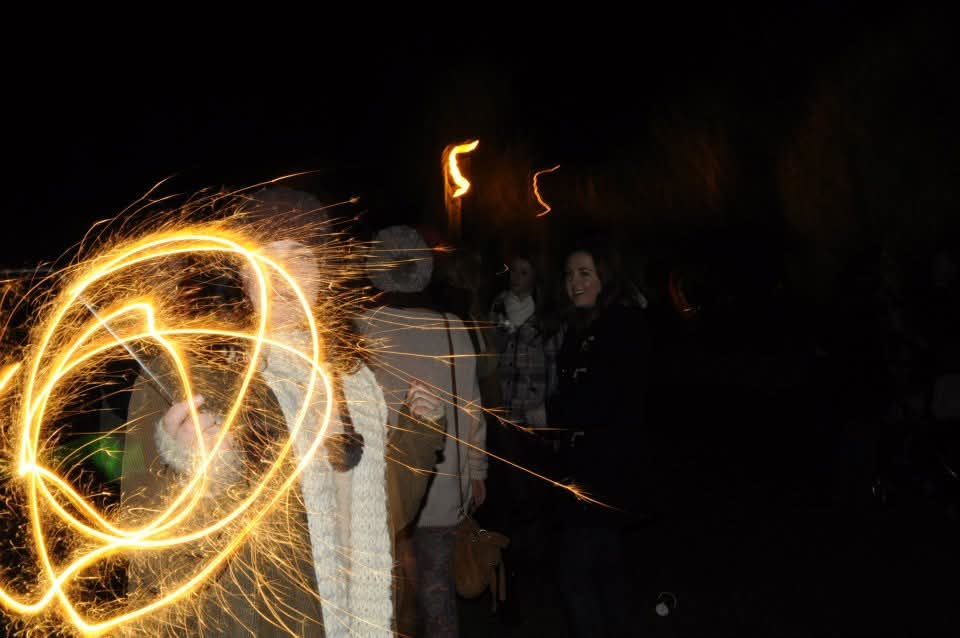
    • Light a bonfire in a safe place where you can’t cause any wildfires or damage. Tell stories, share in the light, and accept the move into darkness. 

    Tell me if you try any of them! And keep your connection to natural cycles alive. 

  • Do being settled and being adventurous have to be mutually exclusive?

    My husband, Jason, and I didn’t grow up sailing. We never darted haphazardly around sheltered bays in highlighter yellow dinghies, joyous screams carrying on the wind and saltwater stains creeping up our torsos. But when we moved onto a boat, it was something that we both promised we’d commit to learning. We wanted Lowenna to be a boat first, our home second, and didn’t want our inexperience to get in the way.

    A year on, and I’m still poring over the Royal Yacht Association’s Go Sailing: A practical handbook for young people, left in the shallows whilst Jason only progresses. Within a year of boat ownership, he has ticked off channel crossings, night sails, and navigating gale force storms at sea. Today, though, we are sitting in the little flat we have started renting in Newquay. It’s a base we adopted when we realised renovating a boat takes far, far, far longer than you think it does, and because after spending a small fortune on Premier Inns throughout the previous winter, we want to be better prepared.

    Jason is sprawled across our little, second-hand striped sofa, twirling his hair around his fingers and looking for fridge compressors on eBay. Lowenna’s had decided to shudder to a halt, and had lain there through the mid-Summer heat, getting warmer and less helpful by the day. An ocean-related question breaks the furrow of his brow, and lightens his warm, chestnut eyes.

    ‘What made you interested in boats?’ I ask. He pushes himself up to seated, swigs from a bottle of water, and contemplates.

    ‘Well, I’ve spent a lifetime in love with the ocean,’ he says, a fond memory pulling on the corners of his mouth. ‘My first bedroom was covered in boats – I had little carved ones on my windowsill. Growing up landlocked made me crave the water so much more. You become attached to it in a different way to people born in coastal places.’ Jason’s childhood bedroom overlooked other people’s gardens in North Nottinghamshire, but he made the pilgrimage to Scarborough whenever a North Sea wave threatened, the glacial waters of the North East coast leaving him with salt on his tongue. The move to Cornwall in 2019 should have been obvious to us, really.

    Jason’s workplaces became increasingly oceanic, from running kitchens in coastal cafés, to training as a fish monger, until eventually he worked with one of our closest friends to open a popup seafood restaurant in Newquay in the summer of 2022. ‘We had a view of the harbour,’ he says, ‘and I would watch people coming and going in all sorts of vessels. It seemed like such a beautiful way to live and explore.’ We think about the times he talked himself onto a few fishing boats, showing up in an old yellow oilskin I’d bought on Depop when we were in our early twenties. Laughing, he covers his face at the thought of how underprepared he was. He sighs, then, breathes life into a thought. ‘There’s a freedom that comes with being out on the open water that’s difficult to forget once you’ve experienced it.’ And if there’s something you need to know about Jason, freedom is his one, overarching goal in life. It’s why he swapped hemmed in cities for open coasts; why he swapped cheffing all weekend for boat building four days a week; and perhaps explains his frustration with renting.

    ‘For a while, I hated it. Things are almost never as good as you expect them to be, it’s difficult to get things fixed, and the complications are endless. I knew I wanted a boat, and I knew I wanted to try living alternatively, so I just thought: why not?’ Had Jason not known the basics of boat maintenance and sailing, this idea might never have gotten off the ground. But watching the person you love grow taller and broader as they talk about an idea has a way of bringing you around to their way of thinking. Not that all my fears were assuaged. 

    ‘Don’t you find the idea of being a beginner at something in your thirties a bit daunting?’ I ask. I know that I’m putting my own fears onto Jason – I’m the one who does all the tasters for all the sports, never to return if I’m not told I’m a natural immediately. When it comes to trying new things, he’s scared of nothing.

    ‘What the hell does it matter?’ He says, eyebrows shooting upwards. ‘We get to be at the start of it all – to build new passions and discover new skills. And the first time you properly set your sails and feel the wind pull you along and take you where you want to go, you feel such a sense of accomplishment.’ He practically jumps out of his seat whilst reminiscing over his first proper sail with our friend Mackie – the former owner of Lowenna. ‘I remember my primal, lizard brain convincing me the boat was going to capsize and that it was all going to go wrong, especially the first time I felt her heeling,’ which, he explains, is the technical term for a boat tilting almost horizontally when turning, ‘but all you have to do is adjust a sail here, or release a jib there.’ Since then, Jason has crewed a sail across the Celtic Sea in gale force six and navigated to France under the stars, experiences that make my stomach feel cold and heavy, but fill his cup to overflow. ‘Knowing there’s no safety net and that you have to work together to make your crossing is so exciting to me. There’s no better feeling than adventure; of getting to a destination and that satisfaction of anchoring up and knowing that your journey has had so much worth.’

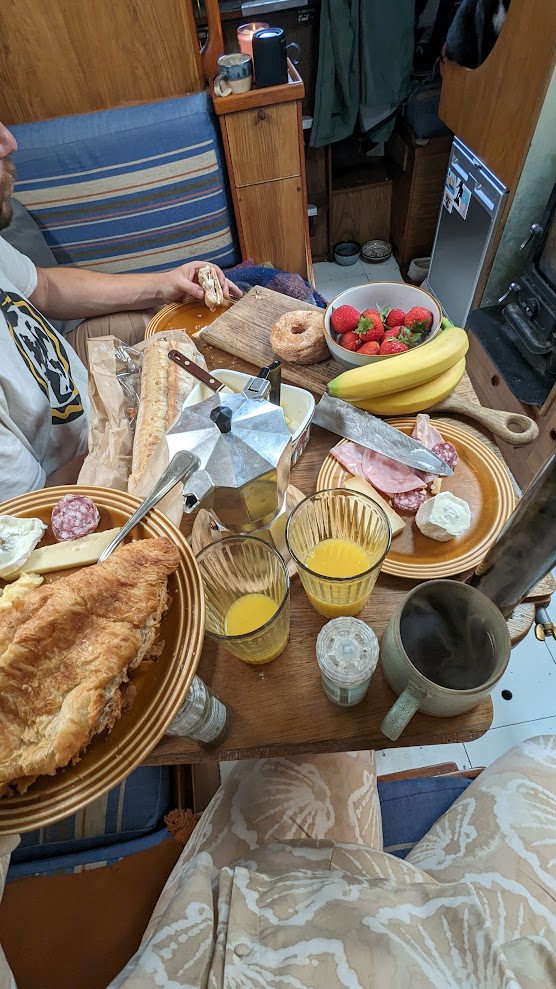
    For the last year, Lowenna has been our home. She’s been shared with our cat – Sarge – and been the site of birthday drinks, lazy Saturday morning brunches, and film nights. But she was designed, first and foremost, as a boat to be sailed. We’ve got our dreams of taking our home through French canal systems, or lazily through the Mediterranean, but it does beg the question: what happens if our home sinks?

    ‘Living on a boat is a wonderful thing. It’s given me a greater appreciation for invention and innovation and really highlighted how little you need to feel truly comfortable,’ Jason begins, ‘but sailing your home and your worldly possessions makes you a lot more anxious. Think about all your clothes, the sentimental things you’ve accumulated, we’ve got our cat. If something goes wrong, they all go under.’ He settles against the back of the sofa, resting his head on the wall as he thinks about this. I know that it’s one of the main reasons we’ve decided to rent a flat again, and why our Sarge is currently living with Jason’s parents. He lifts his gaze up and meets mine, brows knitted again, but this time in contemplation. ‘I don’t have any regrets about living on the boat; I know I want to live life a bit differently. Especially when I see the obsession with buying the bigger car, getting the bigger house, and living the classic nuclear life. I have never felt more at home than living between this tiny little flat and our boat.’ At the end of it all, it doesn’t matter if we take Lowenna to the Scillies, to France, or even just to Fowey for a weekend. She’s nurtured a sense of excitement in both of our lives and shown us home in a new light – one in which feeling settled and adventurous can both exist under one easy heading. Feeling free.

  • The sensation we call ‘feeling at home’ is, psychologically speaking, a sense of belonging and security. It is often bigger than physical space and intrinsically linked to our memories, and the symbolism we ascribe to different things in our lives. For some people, home is a person; for others it’s about language or memory.  Home, for me, is a blue line on the horizon, that grows into a messy, foaming mass when you get up close and personal. Home is the sea off the West coast of the UK.

    Growing up, I lived 15 minutes from the beach, and the stretch of the Wales Coast Path that spans the South coast of Gower was often my default for getting around. If I had planned to meet friends in Mumbles – a Victorian seaside town a ten-minute drive from home – I would often leave an hour early and walk around the cliffs. If I needed to get out of my head during a low moment, off I went, iPod in my back pocket and tangled white headphones poking out of my hoodie.

    In September 2013, I was on the path walking into Caswell Bay – a wide beach that serves surfers, swimmers and body boarders alike – when I stopped and looked down. Frothy waves tumbled towards the shore below me. These were the same waves I’d played in since I was a naked, sandy toddler who didn’t yet know about embarrassment; that I’d been thrown into on Dad’s surfboard when I was nine or ten; that I’d been diving under and floating over with my best friends in the endless summer before we went our separate ways for university. I don’t remember if I said it aloud or kept it to myself, but the words ‘I don’t want to go’ are tattooed on my memory of it all.  

    At that moment I’d realised how significant a part the sea played in my conception of home. My parents, my brothers, the Swansea girlies – any of them could hop on the train and bring a bit of home to London; I couldn’t pick up these beaches – my beaches – and bring them with me. And though getting the train to Brighton or Margate was easy enough, they’re not the same. The waves don’t look like stampeding horses on a stormy day, and their softness and roundness feel too controlled.

    The sea in the South West of the UK – the Celtic Sea, the North Atlantic, even the more exposed bits of the Bristol Channel – has a wild and unpredictable nature. There are days where the surface is like glass and you can swim for 40 minutes in total serenity, then there are days where you sit out of reach, watching waves the size of buildings pummel and smash the cliff walls below. Yet, despite her many faces, the sea has been a constant in my life, teaching me the importance of play, of being present, and of respecting boundaries. Being enveloped by her is both humbling and empowering; yes I’m small in the grand scheme of things, but how amazing that the stars aligned, or space dust exploded in such a way that meant I got to be here, right now, at the same time as the sea. And the moment I risk forgetting those lessons is when I’ll spot that blue line on the horizon again, and remember how lucky I am to be here.

    At least eight of our ancient Celtic nations are coastal, including Wales and Cornwall. I wonder how far my association with the sea is inherited, passed down from ancestors and embedded in my own consciousness through evolution. For Celtic tribes and communities, the sea was a life source. It provided food, means of trade and travel, and stories that taught moral life lessons. Perhaps this is why being near the sea makes me feel whole – I’m getting to honour a tradition that runs deeper and is more elemental than I could possibly understand.

    When I left London at 24, there was no hesitation. I walked out of work on my last day in a wonderful school, got a cold Diet Coke that dripped with condensation, put my snacks in a cooler, and drove the 300 miles to Truro with only one toilet break (which, knowing me and my bladder, is huge). I think it’s because, although I wasn’t going back to Swansea, I was returning to the Celtic Sea. I didn’t know a single person in Cornwall, but it absolutely felt like I was going home.            

    So, what is home for you? A person, a place, an idea? What does it look like? Feel like? Let’s talk about it and keep home alive no matter where you are.